The project narrative suggests a balanced amenity ecosystem that combines active, social, and restorative spaces. This typically includes a clubhouse anchor, fitness and indoor activity zones, pool-led recreation, children’s play areas, landscaped walkways, and calmer corners for slower-paced community use. The advantage of a mixed amenity strategy is inclusivity. Different age groups and lifestyle preferences can coexist without one use type dominating the entire project environment.
That said, buyers should evaluate amenities through a practical lens. The key question is not just how many facilities are listed, but how usable they are, how they are distributed, and how they will be maintained post-handover. In many projects, amenity value depends less on the launch brochure and more on design quality, access convenience, operations discipline, and resident behavior over time.
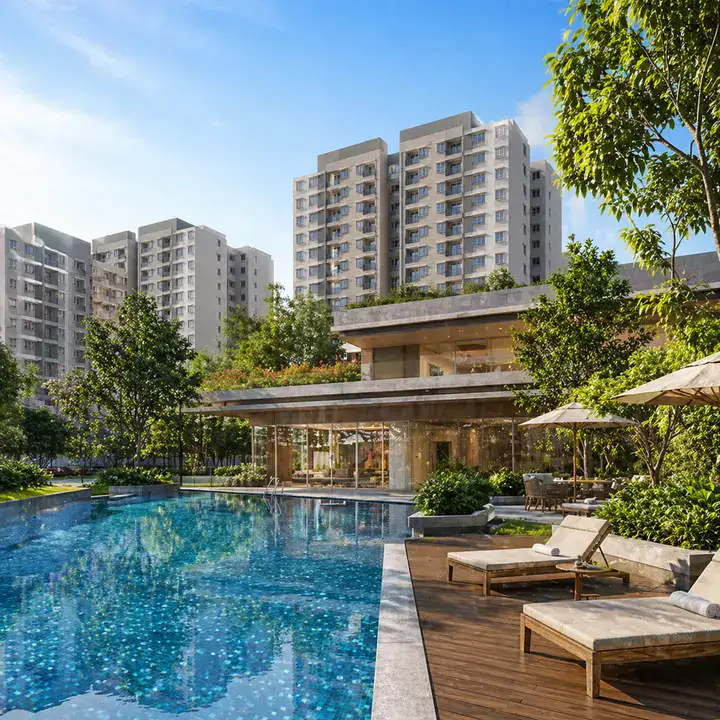
Clubhouse as the Community Core
In projects like Highland Hideaway, the clubhouse usually acts as the social heart of the community. A well-planned clubhouse supports both routine and event-driven usage: fitness sessions in the morning, work-friendly lounges during the day, indoor recreation in the evening, and family or cultural events on weekends. This layered usage model helps transform amenities from static infrastructure into active community assets.
From a buyer perspective, clubhouse quality should be evaluated by functional zoning, not just lobby aesthetics. Look for clarity in how spaces are organized: fitness rooms should be practical and ventilated, indoor game areas should avoid bottleneck circulation, and multipurpose halls should be accessible without disturbing quieter zones. If the clubhouse is planned with real usage patterns in mind, it usually ages better and sees sustained engagement.
Another practical checkpoint is capacity planning. In larger communities, a clubhouse can become overcrowded if facilities are undersized relative to resident volume. Buyers should ask whether the amenities are designed for meaningful usage at scale, especially during peak hours or weekend periods when demand is naturally higher.
Fitness, Wellness, and Daily Health Use
Fitness infrastructure in modern townships is no longer limited to a basic gym. Buyers increasingly expect a broader wellness ecosystem that supports different routines and age groups. Highland Hideaway’s amenity positioning suggests such a mix, likely including gym spaces, yoga-friendly areas, walking tracks, and outdoor wellness-oriented pockets. For residents, this reduces reliance on external memberships and improves consistency of healthy routines.
When evaluating fitness amenities, practical usability matters more than equipment count. A gym with adequate floor planning, ventilation, and durable equipment layout delivers better value than a visually impressive but cramped setup. Similar logic applies to yoga or meditation spaces. Quiet location, comfortable light, and proper separation from high-noise activity zones can significantly influence real usage.
Families should also assess whether wellness spaces are inclusive. A project that supports both active exercise and low-impact movement options often serves a wider resident profile, from young professionals to seniors. This inclusivity contributes to stronger community satisfaction and long-term amenity relevance.
Pool, Recreation, and Leisure Programming
Pool zones are often among the most visible amenities in a project, but long-term value depends on design and management quality. A good pool environment balances recreation with safety, maintenance practicality, and seating comfort. Dedicated zones for children and adults, clear deck planning, and shaded relaxation areas can improve usage quality and reduce conflict between different user groups.
Beyond the pool itself, leisure planning should include complementary spaces such as lawns, informal seating edges, and social pockets where residents can gather without requiring formal bookings. These “in-between” spaces are often where real community life forms. Buyers should evaluate whether leisure zones feel naturally connected to circulation paths and residential clusters, or if they appear isolated and difficult to access.
Another useful question is seasonal usability. Outdoor leisure spaces should remain practical across different weather conditions. Shade strategy, drainage planning, and surface material choices all influence whether these amenities remain active year-round or are only occasionally used.
Children and Family-Centric Amenity Value
For family buyers, children’s amenity quality can be a decisive factor. Safe, visible, and age-appropriate play areas support both child development and parent convenience. In well-designed communities, play zones are not isolated corners but integrated parts of the broader social landscape, with passive supervision opportunities and comfortable seating nearby.
Parents should check flooring safety standards, play-equipment variety, and separation from vehicular movement corridors. A play area that is technically present but poorly located or difficult to supervise often sees low engagement. Communities that prioritize child usability and parent comfort generally develop stronger family retention and a more active neighborhood culture.
Family-centric planning can also extend to open lawns, casual activity spaces, and event-friendly zones where children and adults can participate in seasonal or community programming. These shared-use environments often become long-term differentiators in township projects.
Senior-Friendly and Inclusive Design Considerations
Inclusive amenity planning should account for residents who prefer low-intensity, comfort-led spaces. Senior-friendly seating, shaded pathways, gentle walking loops, and quieter landscape pockets can make a substantial difference in daily livability. Projects that overlook this often become visually active but socially imbalanced, with limited options for residents who seek calm and accessible outdoor experiences.
Buyers should assess whether pathway gradients, resting intervals, and lighting design support all-age usage. Accessibility is not only about regulatory compliance; it is about whether residents of different mobility profiles can participate in community life comfortably. A thoughtfully inclusive amenity layout often signals stronger long-term planning maturity.
In multigenerational households, these details become even more important. A project that supports children, working adults, and seniors equally usually delivers higher collective satisfaction and better long-horizon ownership value.
Landscape-Led Lifestyle and Open-Space Experience
Landscape is one of the most underappreciated amenity layers in large residential projects. While buyers often focus on headline facilities, the quality of planted spaces, walkways, and shaded outdoor zones has a direct effect on how often residents actually leave their apartments and engage with the community. Highland Hideaway’s broader planning story suggests strong emphasis on green integration, and buyers should evaluate this carefully.
A successful landscape strategy should provide both activity and recovery. Some spaces should support movement, play, and social gathering. Others should support quiet use, reading, conversation, or simple evening walks. The best communities create a gradient between active and restorative zones, allowing residents to choose according to mood and routine.
Long-term landscape quality depends on maintenance planning as much as initial design. Buyers should ask about irrigation methods, plant selection durability, and common-area upkeep systems. Well-maintained greenery can materially improve project perception years after possession, while neglected landscape areas quickly reduce community appeal.
Sustainability and Utility-Driven Amenity Planning
Modern amenity value is increasingly tied to sustainability and resource management. Systems such as rainwater harvesting, sewage treatment, and energy-efficient common-area lighting are not only environmental features; they also influence operating resilience and potentially long-term maintenance economics. Highland Hideaway is expected to include such systems, and buyers should seek clarity on implementation quality.
It is useful to separate sustainability messaging into two categories: design intent and operational reality. Design intent appears in brochures. Operational reality appears in capacity planning, monitoring systems, and maintenance discipline. Buyers should ask how these systems are run, who oversees them post-handover, and what controls are in place for continuity.
Projects with robust utility planning often experience fewer disruptions and stronger resident confidence during high-demand seasons. In Bengaluru conditions, water and energy planning are especially important practical indicators of long-term livability.
Amenity Maintenance, Governance, and Real-World Performance
The long-term success of any amenity ecosystem depends on operations governance. Even strong infrastructure can deteriorate without proper maintenance routines, staffing, and resident-use protocols. Buyers should understand how common facilities are expected to be managed after handover, including maintenance budgeting, service standards, and role clarity between facility teams and resident associations.
Another useful checkpoint is lifecycle thinking. Pools, gym equipment, children’s play surfaces, and indoor activity spaces all require periodic upgrades and preventive maintenance. Communities that plan for lifecycle costs early tend to preserve quality better and avoid sudden deterioration after initial occupancy phases.
From an ownership-value perspective, maintenance quality directly affects rental demand and resale confidence. Prospective buyers and tenants quickly notice whether amenities are active, clean, and reliably functional. In this sense, maintenance is not a backend issue; it is part of the project’s market identity.
How Buyers Should Evaluate Amenity Claims
Before finalizing a booking decision, buyers should evaluate amenities using a simple framework. First, check relevance: which facilities will your household actually use at least weekly? Second, check accessibility: how easily can you reach those spaces from your block? Third, check usability: are the spaces sized and planned for realistic resident load? Fourth, check continuity: what confidence do you have in long-term maintenance?
It is also helpful to ask for phase-wise amenity delivery timelines in larger projects. Some facilities may be delivered later, and buyers should know this clearly in advance. A transparent schedule reduces expectation mismatch and helps households plan realistically for early years of occupancy.
Finally, compare amenity value against all-inclusive ownership cost. A project with slightly fewer but better-maintained amenities can outperform one with a long list of underused facilities. Quality, accessibility, and consistency are usually more important than count.
Final Perspective on Lifestyle Value
Prestige Highland Hideaway’s amenity direction appears aligned with what current urban buyers increasingly prioritize: flexible wellness options, family-friendly spaces, green integration, and community-focused shared infrastructure. If execution quality matches design intent, the project can deliver meaningful lifestyle value beyond apartment interiors.
For end users, amenities should be viewed as time-saving and quality-of-life infrastructure. For investors, they should be viewed as demand-supporting features that can strengthen tenant and resale preference. In both cases, the right decision comes from balancing aspiration with verification. Evaluate what is promised, confirm what is committed, and prioritize what your household will actually use.
When amenity planning, maintenance discipline, and resident usability align, township projects tend to perform better over time. That is the lens buyers should apply while assessing Highland Hideaway’s lifestyle proposition.
Amenities at a Glance
The amenities named in the current project material, grouped by how you would use them.
Fitness & Wellness
Sports & Recreation
Clubhouse & Community
Landscape & Open Space
Safety & Utilities
Prestige Highland Hideaway Amenities - Frequently Asked Questions
What amenities are planned at Prestige Highland Hideaway?
The amenity list includes clubhouse, swimming pool, gymnasium, indoor games, landscaped gardens, security, parking, retail spaces, and open spaces. Outdoor sport additions of tennis courts, badminton courts, a half-basketball court, and dedicated cycling and jogging tracks are also part of the stated plan. Final scope and phasing will follow the sanctioned plan.
What is inside the Prestige Highland Hideaway clubhouse?
The multi-level clubhouse is expected to house a state-of-the-art gymnasium with cardio and weight equipment, aerobics and yoga studios, indoor badminton and squash courts, and a multi-purpose hall for community events. Co-working zones, a library lounge, a café, and a convenience store are also part of the plan. Clubhouse hours and access rules will be set closer to handover.
What outdoor and pool amenities does Prestige Highland Hideaway plan?
A resort-style swimming pool anchors the recreational zone, with separate splash pools for children and sun loungers around the deck. Adjacent landscaped lawns with seating terraces are designed for picnics, yoga sessions, and weekend gatherings. Adventure playgrounds with modern equipment and safe flooring serve children, while seniors get quiet pergola corners.
Are there spaces for sport, pets, and seniors at Prestige Highland Hideaway?
Yes - the master plan includes tennis and badminton courts, a half-basketball court, and cycling and jogging tracks for sport; a fenced pet park where dogs can run free without disturbing residents; and pergolas, benches, and quiet corners for seniors. The intent is to support multiple age groups inside the same community. Allocation per phase will track the construction schedule.
Will community events and programming happen at Prestige Highland Hideaway?
Prestige typically organises cultural evenings, fitness workshops, and children's activities in its townships, and Highland Hideaway is expected to continue that pattern. A built-in resident programming layer is one of the operational advantages of large-format Prestige communities. Specific event calendars are set after community handover and resident association formation.
Will all Prestige Highland Hideaway amenities be ready at first handover?
Amenity phasing depends on the construction timeline filed under RERA, and a few facilities typically come up alongside the first occupiable tower while others arrive in later phases. Ask which amenities are committed to phase one, which arrive later, and how maintenance funds the long-term upkeep. Get the phasing schedule in writing before booking.